Single App vs Multiple Tools for Tattooers
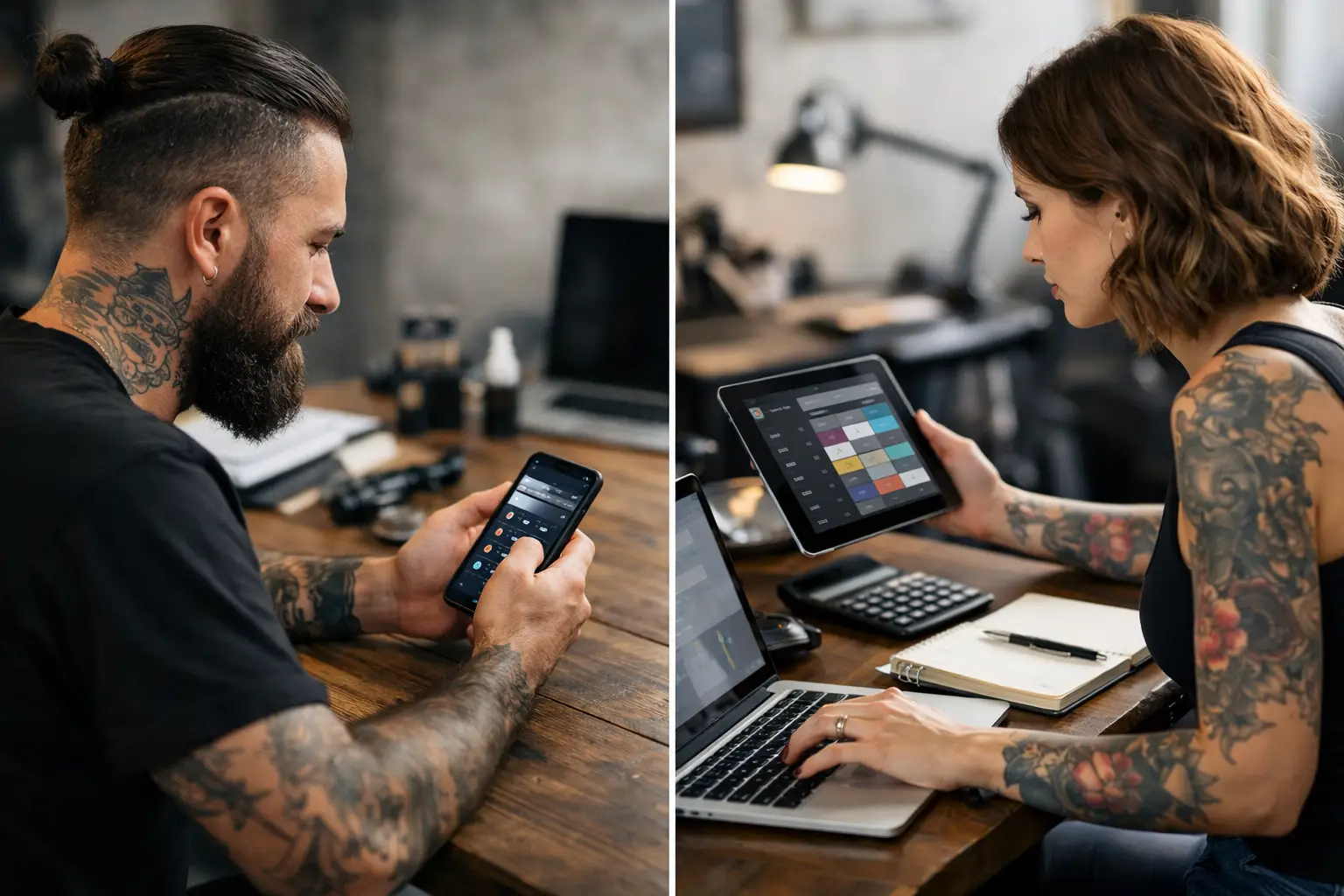
You know the moment. A client sends reference photos in Instagram, asks about pricing by text, pays a deposit in one app, fills a form somewhere in their email, then shows up and says, "Wait, what time was this again?" That’s the real single app vs multiple tools debate. It’s not about tech. It’s about how many dumb little fires you want to put out before you even start tattooing.
For tattoo artists, admin chaos usually starts small. One form here. One payment app there. A calendar on the side. Then it stacks up. Suddenly you’re checking five places just to confirm one appointment. That might work when your books are light. Once things get busy, it gets annoying fast.
Single app vs multiple tools: what are you really choosing?
On paper, multiple tools can sound fine. Maybe even smart. You pick the "best" app for messaging, another for scheduling, another for deposits, another for consent forms, and maybe a spreadsheet because somehow spreadsheets always sneak in.
The problem is those tools don’t care about each other. They don’t talk. They don’t keep context. They just sit there like separate stations in a bad scavenger hunt.
A single app works differently. One place for inquiries, appointments, deposits, payments, and consent forms. Less switching. Less copy-pasting. Less "hold on, let me check something." If you’re tattooing all day, that matters more than fancy features you barely use.
This is where artists usually split into two camps. One camp says, "I’ve already got a system." The other says, "My system is held together by screenshots and hope." Both are common. Only one is fun.
Why multiple tools feel cheaper at first
Multiple tools usually win the first round because they look flexible. A free form builder. A cheap calendar. A payment app you already have. DMs cost nothing, right?
Not exactly.
The price of multiple tools isn’t just the monthly cost. It’s the time you spend bouncing between them. It’s missed messages. It’s chasing deposits. It’s consent forms that don’t get signed until the client is already in your chair. It’s double bookings because one thing didn’t update another thing.
That kind of mess has a cost, even if it doesn’t show up as a line item on your bank statement.
And tattoo admin has a way of expanding to fill every gap in your day. Ten minutes here. Fifteen there. A "quick reply" at dinner. A calendar fix on your day off. A deposit reminder you forgot to send. None of it feels huge on its own. Together, it eats your week.
The real trade-off in single app vs multiple tools
To be fair, multiple tools are not always wrong.
If you’re a brand-new artist with a tiny client load, you can probably survive with a patchwork setup for a while. If you love tinkering with systems and don’t mind managing the gaps yourself, you may even prefer it. Some artists genuinely like building their own stack.
But the more booked out you get, the more those gaps start costing you. That’s the part people skip. What works at five appointments a month can break hard at fifty.
A single app is less about control and more about relief. You trade some customization for less back-and-forth. That’s usually a good trade when your day already includes drawing, setup, tattooing, cleaning, client care, and trying to eat lunch before 4 p.m.
The question isn’t "Which setup is more advanced?" It’s "Which setup gives me more time tattooing?"
Where multiple tools usually break down
The first weak spot is inquiries. A client reaches out, you reply later, then the details get buried under memes, healed photos, and "how much for this?" messages from six different people. Now you’re scrolling through DMs trying to figure out who actually filled out what.
The second weak spot is scheduling. If your booking form, calendar, and deposit process all live in different places, there’s room for people to slip through. Somebody thinks they’re booked because they sent a message. You think they’re not booked because no deposit came through. Nobody is technically wrong, but now you’ve got a problem.
The third weak spot is paperwork. Consent forms done manually are easy to forget, easy to lose, and annoying to chase. If you’ve ever handed someone a clipboard while your station is ready and your next client is already waiting, you know the feeling.
Then there’s payment. Splitting deposits and final payments across different apps can work, but it creates extra checking, extra reminders, and extra chances for confusion. That’s a lot of admin for something that should be simple.
Why a single app usually fits tattooing better
Tattooing isn’t like running a generic appointment business. Your clients send reference images. They ask sizing questions. They ghost. They reschedule. They forget forms. They swear they sent the deposit. The work is custom, and the booking process is messy by nature.
That’s why all-in-one tools make more sense here than they do in a lot of other jobs. Tattoo artists don’t need a giant software setup. They need fewer moving parts.
When inquiries, bookings, deposits, payments, and consents live together, the whole process gets easier to trust. A client inquires. You review it. They book. They pay the deposit. They sign the form. You see it all in one place. No detective work.
It also feels better for the client. Less confusion. Fewer missed steps. Fewer weird handoffs between apps. That doesn’t just save you time. It makes you look more put together without extra effort.
Single app vs multiple tools for busy artists
If you’re booking a lot of work, the single app vs multiple tools question gets pretty simple.
Busy artists don’t need more tabs open. They need fewer interruptions.
Every extra app creates another place where something can stall. Another login. Another notification. Another tiny task to remember. Maybe that sounds dramatic, but anyone who has stopped mid-stencil to check whether a deposit came through knows it’s not.
One app won’t make your day perfect. Clients will still ask questions they already asked. Somebody will still show up early. Somebody else will still forget aftercare exists. But the backend gets cleaner, and clean systems are underrated when your hands are full.
That’s also where fewer no-shows and fewer last-minute surprises come from. Not magic. Just a process that doesn’t rely on memory, screenshots, and good luck.
So which one should you choose?
If your current setup is working and you genuinely don’t mind the admin, keep it. No need to fix what isn’t broken.
But be honest. Working doesn’t mean "technically possible." It means you’re not wasting time chasing deposits, digging through messages, fixing calendar mistakes, or scrambling for consent forms while your client watches.
If any of that sounds familiar, multiple tools probably aren’t saving you money. They’re just spreading the hassle around.
A single app makes the most sense when you want everything in one place and you’re tired of babysitting your booking process. That’s especially true if your goal is simple: book more clients, reduce no-shows, and spend more time tattooing.
That’s the whole reason apps like OneBook exist. Not to impress anyone with software talk. Just to make the day less annoying. Inquiries, appointments, deposits, built-in payments, and automatic consents - all in one place. Dirt cheap, easy to use, and built for tattoo artists.
There’s no trophy for managing six tools at once. If patching things together works for you, cool. If you’re over it, there’s a better way.
Try the setup that gives you fewer tabs, fewer headaches, and fewer "hang on, let me find that." Your machine should be buzzing more than your phone.
