Tattoo Consent Form Online Done Right
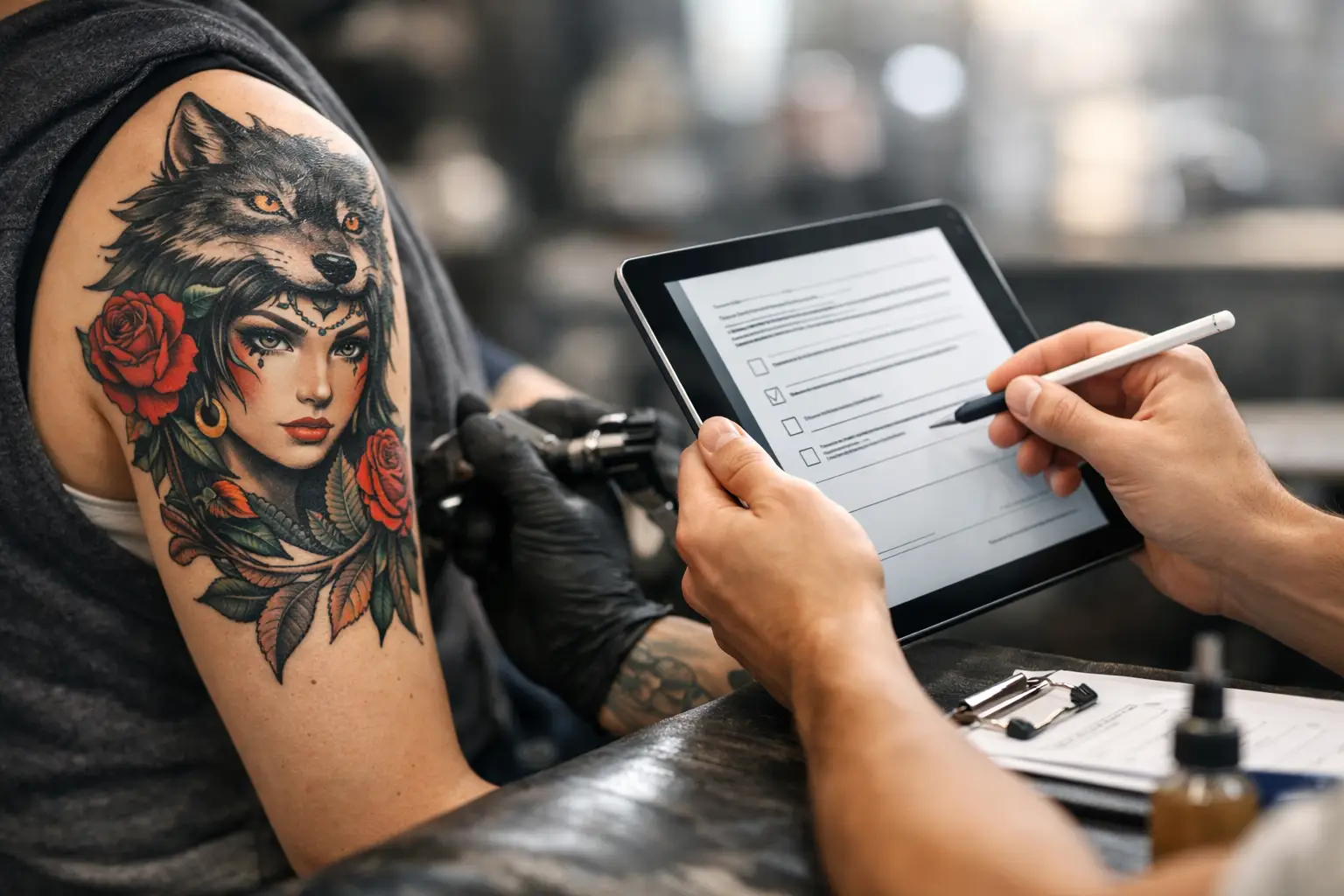
Paper forms always seem fine until a client shows up early, your station is still getting set, and someone is asking where the clipboard went. A tattoo consent form online fixes that mess fast. It gives clients a clean way to fill out paperwork before the appointment, and it gives artists one less thing to chase down at the front of the day.
For tattoo artists and shop owners, this is not about adding more software just to feel modern. It is about cutting out friction. When consent forms live online, you spend less time printing, filing, scanning, and hunting for missing signatures. You also give clients a smoother check-in experience, which matters more than people think.
Why a tattoo consent form online works better
Most shops do not struggle because the tattoo work is hard. They struggle because the admin piles up. A client messages on Instagram, confirms by text, sends a deposit through one app, and then fills out a paper waiver in the lobby. That system works until it does not.
A tattoo consent form online pulls one important part of the process into something more reliable. The client can review the form on their own time, sign it from their phone, and send it back before they walk in. That means fewer bottlenecks at the counter and fewer rushed conversations while you are trying to prep for a session.
It also helps with recordkeeping. Paper gets lost. Ink fades. Filing cabinets overflow. A digital form is easier to store, easier to search, and easier to pull up later if a client comes back for another session or asks a question months down the line.
There is also a professionalism factor. Clients notice when your process feels clear and organized. They notice when they do not have to balance a clipboard on their knee while filling out tiny boxes in a waiting area. That first impression carries into the appointment.
What artists actually need from a tattoo consent form online
Not every digital form setup is useful. Some are just paper forms turned into clunky PDFs that clients hate filling out on a phone. If the form is hard to complete, clients will ignore it, delay it, or show up confused.
The best setup is simple. It should be easy to send, easy to sign, and easy to find later. It should also fit the way tattoo shops work, not the way a random office handles intake.
Mobile-friendly signing
Most clients are opening forms on their phones, not on a desktop computer. If your tattoo consent form online is hard to read on a small screen, completion rates drop. Fields should be clear, buttons should be obvious, and the signature process should take a minute or two, not ten.
Clean client records
A consent form is not helpful if it sits in a separate inbox or gets saved under random file names. You want each form connected to the right client and easy to pull up before the appointment. This matters even more for repeat clients and multi-session projects.
Room for the details that matter
Tattooing is not a one-size-fits-all service. Your form may need health disclosures, aftercare acknowledgment, age confirmation, emergency contact details, or guardian information when legally allowed and required. The point is not to make the form longer than necessary. The point is to make it complete enough to protect the shop and set expectations clearly.
A process that fits booking
Consent works best when it is part of the booking flow, not a separate chore you remember the night before. If a client books, pays a deposit, and then automatically receives the form, that is one smooth path. If you have to manually send everything in pieces, you are still doing admin gymnastics.
The real payoff is time
Time is the thing most artists are short on. Not ideas. Not effort. Time.
When a tattoo consent form online is built into your workflow, you save small chunks of time all week. You stop printing. You stop answering the same form questions in person. You stop sorting stacks of paperwork at the end of the month. You stop realizing halfway through a busy day that someone never filled out a waiver.
None of those tasks feels huge on its own. Together, they eat hours.
That saved time matters differently depending on the shop. For a solo artist, it might mean fewer late-night admin catch-up sessions. For a growing studio, it might mean less front-desk chaos and a cleaner handoff between artists. Either way, less paperwork means more room to tattoo.
Better client experience, fewer bottlenecks
Clients like clear steps. They do not want to guess what happens after they book. A good system tells them what to do, when to do it, and what to expect when they arrive.
Sending a tattoo consent form online before the appointment helps with that. It gives clients a chance to read everything without feeling rushed. They can complete it at home, ask questions ahead of time, and show up ready. That makes check-in faster and keeps the day moving.
It can also reduce awkward surprises. If a client has not read your policies, aftercare acknowledgment, or health questions until they are already in the chair, that is a bad time to sort it out. Handling that ahead of time leads to fewer delays and fewer misunderstandings.
There is a trade-off, though. Some clients will still forget to complete the form before arriving. That does not mean the system failed. It just means your reminders and booking flow should make the next step obvious. Digital forms work best when they are part of a simple, repeatable process.
How to set up your tattoo consent form online
Keep this practical. Start with the form you already use and clean it up. Remove anything outdated, repetitive, or unclear. Clients should understand what they are signing without needing a guided tour.
Then think about timing. The best moment to send the form is usually after the booking is confirmed and before the appointment day. Too early, and clients forget. Too late, and you are back to chasing paperwork.
Make sure the form is attached to the client record, not just floating around in email. This is where an artist-first system helps. When your booking, deposit, messages, and consent form all live in the same place, the whole process gets easier to manage. OneBook was built around that exact problem - giving tattoo artists one place to handle the parts of the job that happen before the machine turns on.
Last, test the client experience yourself. Open the form on your phone. Fill it out like a new client. If anything feels clunky, your clients will feel it too.
Common mistakes with digital consent forms
The biggest mistake is overcomplicating it. Some shops try to cram every policy, every edge case, and every possible scenario into one giant form. That can backfire. Clients skim long forms. Keep what matters, say it clearly, and avoid turning it into a wall of text.
Another mistake is using a system that is not made for tattooing. Generic tools can work, but they often create extra steps. You end up patching together forms, appointments, messages, and payment records across different apps. That is better than paper in some cases, but it still leaves room for things to slip.
The last common issue is poor follow-through. If you switch to a tattoo consent form online but still accept missing forms, still store records inconsistently, or still rely on DMs for everything else, you will not get the full benefit. The form should be one part of a cleaner workflow, not a random add-on.
Is online consent right for every shop?
Mostly, yes, but the setup can vary.
A single artist working by appointment only may want a very lean process with just the essentials. A busy street shop may still need a way to handle walk-ins quickly. A private studio doing larger custom work may want deeper intake and more detailed records tied to multi-session projects. The right answer depends on your pace, your client flow, and how much admin you want to handle manually.
What does not really change is the upside. Online forms are easier to send, easier to sign, and easier to store. That alone solves a lot of everyday headaches.
If your current system involves paper stacks, scattered messages, and last-minute scrambling at check-in, this is a simple place to tighten things up. Start there. Make consent easy. The smoother the process feels before the appointment, the more energy you get back for the part that actually matters - tattooing.
