Tattoo Deposit Payment System That Works
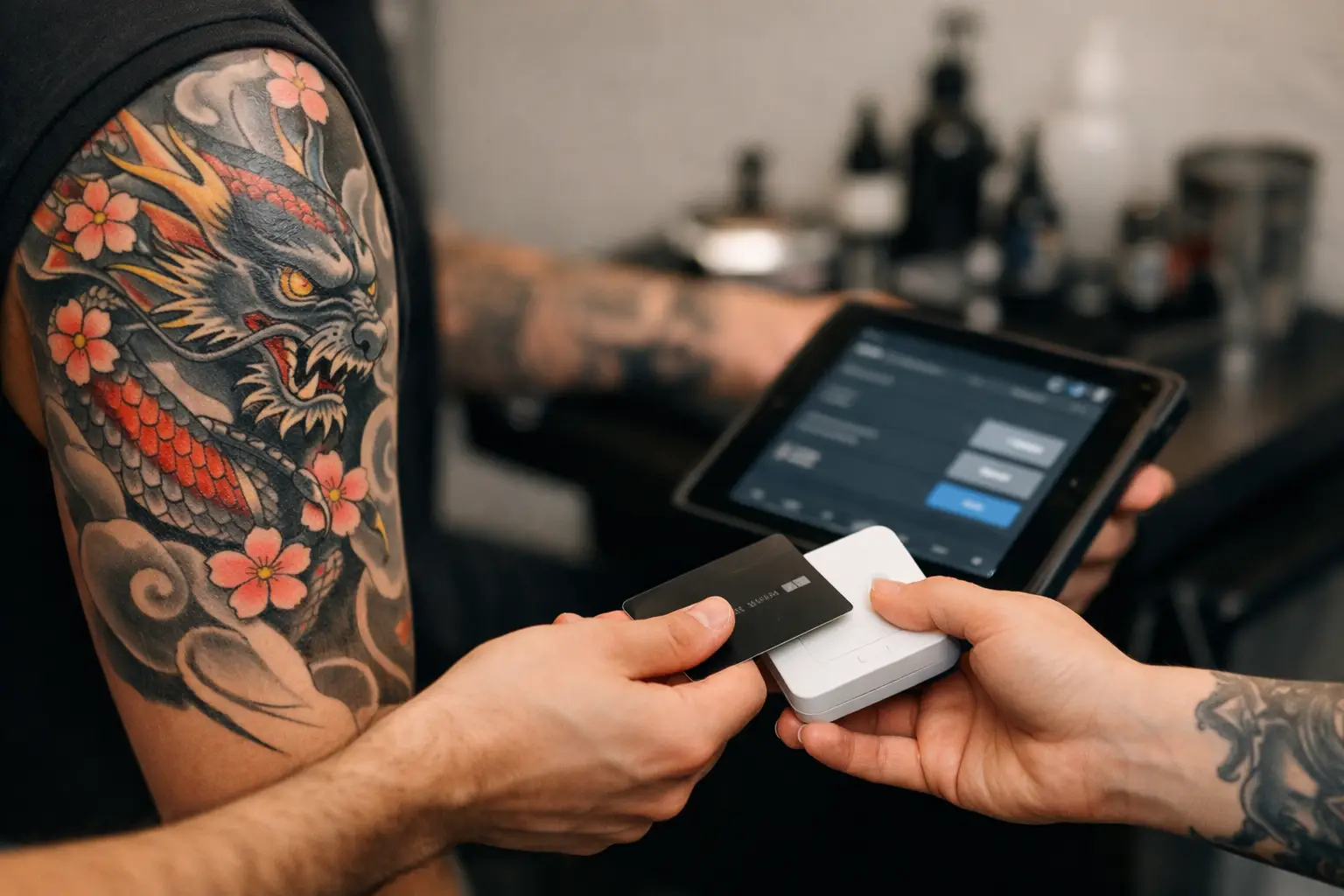
A client says they’re ready to book. You send your payment handle. They ask how much. You reply. Then they ask if the deposit is refundable. Then they vanish for two days. Meanwhile, that date sits in limbo and your inbox keeps stacking up. That is exactly why a tattoo deposit payment system matters.
For tattooing, deposits are not just about getting paid upfront. They protect your time, filter out flaky inquiries, and make the booking process feel real for the client. But the way most artists collect deposits is still messy. A mix of DMs, text threads, payment apps, notes, and screenshots turns a simple step into admin soup.
A good system fixes that. Not with more complexity. With fewer moving parts.
What a tattoo deposit payment system should actually do
A tattoo deposit payment system should make one thing happen fast: serious clients book, pay, sign, and show up. If it takes ten messages and three apps to get there, the system is broken.
The best setup ties the deposit directly to the appointment. That means the client gets the booking details, pays the required amount, and understands the terms before the date is locked in. No side conversations. No guessing whether they sent the payment. No checking four apps to confirm what happened.
It should also make your policy clear before money changes hands. If your deposit goes toward the tattoo total, if it transfers once with notice, or if it is nonrefundable, that should be built into the process. Not buried in a text you sent at midnight.
This matters because most deposit problems are not really payment problems. They are communication problems. The money part is easy. The confusion around the money is what burns time.
Why artists outgrow pieced-together payment methods
At first, collecting deposits through whatever payment app is handy feels fine. It works when your schedule is light and every booking is simple. But once your books start filling, the cracks show fast.
You end up matching names manually because the payment came from a username that does not match the client inquiry. You scroll for proof that someone paid. You answer the same deposit questions over and over. And if a client reschedules, you have to remember whether their deposit moved with them, expired, or got applied already.
That is the hidden cost. Not the transaction itself. The mental load around it.
For custom work and multi-session pieces, it gets even worse. A half-day session, a sleeve, and a small flash appointment should not all follow the same deposit logic. Some artists want fixed deposits. Some want percentage-based deposits. Some want different rules for repeat clients. A random payment request in a DM cannot handle that cleanly.
A real tattoo deposit payment system gives structure without making the process stiff. You still set the rules. You just stop babysitting them.
The best tattoo deposit payment system reduces no-shows
No-shows usually start long before the appointment date. They start in weak booking flows.
If a client can hold a spot without paying, the date does not feel committed. If they pay but never sign a consent or never confirm the appointment details, they are still half in, half out. Friction in the wrong places creates drop-off. Too little structure creates flaking.
That is why the best deposit systems connect a few steps in the right order. Inquiry first. Appointment details next. Deposit payment after that. Consent and confirmation attached to the same booking. Simple. Direct. Hard to misunderstand.
When clients know exactly what they are booking, exactly what they owe, and exactly what happens if they reschedule, they are far less likely to ghost. Not because software magically fixes people, but because clarity cuts excuses.
Automatic reminders help too, but reminders only work if the booking itself is solid. You cannot automate your way out of a messy setup.
What to look for in a system built for tattooing
General booking tools miss the stuff tattoo artists deal with every day. Reference images. Design notes. Session tracking. Different deposit rules for different types of work. Consent forms tied to the appointment. Those are not bonus features. They are the workflow.
So when you look at a tattoo deposit payment system, do not just ask whether it can collect money. Ask whether it fits the way tattooing actually works.
It should connect inquiries to bookings, not treat them like separate jobs. It should let clients upload reference images before the appointment gets finalized. It should keep payment records attached to the actual client and session. And it should make reschedules less annoying instead of creating a fresh mess every time someone needs to move a date.
This is where all-in-one beats patchwork. When your deposit system talks to your calendar, your forms, and your client messages, you stop repeating yourself. That means fewer mistakes, fewer missed details, and fewer hours wasted playing detective.
Deposit policies still need common sense
Software helps, but it cannot write a smart policy for you.
Your deposit amount should match the kind of work you do. If your appointments are short and easy to refill, your deposit might stay lower. If you book large custom projects weeks or months out, a higher deposit usually makes sense. The goal is not to punish clients. The goal is to protect your time and make commitment real.
Refundability depends on your process. Some artists keep deposits strictly nonrefundable. Some allow one reschedule with enough notice. Some make exceptions for emergencies. There is no magic universal rule. What matters is being consistent and clear.
That said, complicated policies usually backfire. If your deposit terms need a full paragraph of fine print to make sense, clients will miss something and you will end up explaining it later. Cleaner policy, cleaner bookings.
A good system supports that by putting your terms in front of the client at the right moment. Not after the payment. Before it.
Why built-in payments beat chasing deposits manually
Manually chasing deposits is one of the fastest ways to waste half your day.
You send a reminder. Then another. Then a payment request. Then a screenshot of your handle because they lost it. Then a note to yourself that the date is pending. Then another message because someone else asked for the same time slot.
Built-in payments cut all of that. The client gets the request as part of the booking flow, pays through the same system, and the appointment updates accordingly. You do not have to wonder whether the spot is held. You do not have to match a payment to a mystery username. You do not have to explain the next step every single time.
That speed matters. Not because anyone loves admin, but because less admin means more tattoos. More room to draw, tattoo, reply to serious inquiries, and keep your books full without feeling buried.
For busy artists, easy beats fancy every time.
The real win is fewer loose ends
The strongest tattoo deposit payment system is not the one with the most features. It is the one that closes loops.
Client inquiry comes in. Project details get captured. Deposit gets paid. Consent gets signed. Appointment gets confirmed. Messages stay attached to the client. Everybody knows what is happening.
That kind of setup changes the whole feel of your week. You stop starting every morning by checking who paid, who signed, who replied, and who still needs a follow-up. You stop relying on memory for stuff that should already be tracked.
If your current process lives across DMs, calendar apps, payment apps, and paper forms, you do not need more hustle. You need fewer moving parts. That is the whole point of a system made for tattoo artists.
OneBook does exactly that. Inquiries, bookings, built in payments, automatic consents, and client management in one place. Dirt-cheap, easy, and made for tattooing. You can try it free for 30 days and see how much quieter your admin gets.
A deposit should hold the appointment, not hold your whole day hostage.
