Why an All-in-One Tattoo Studio App Works
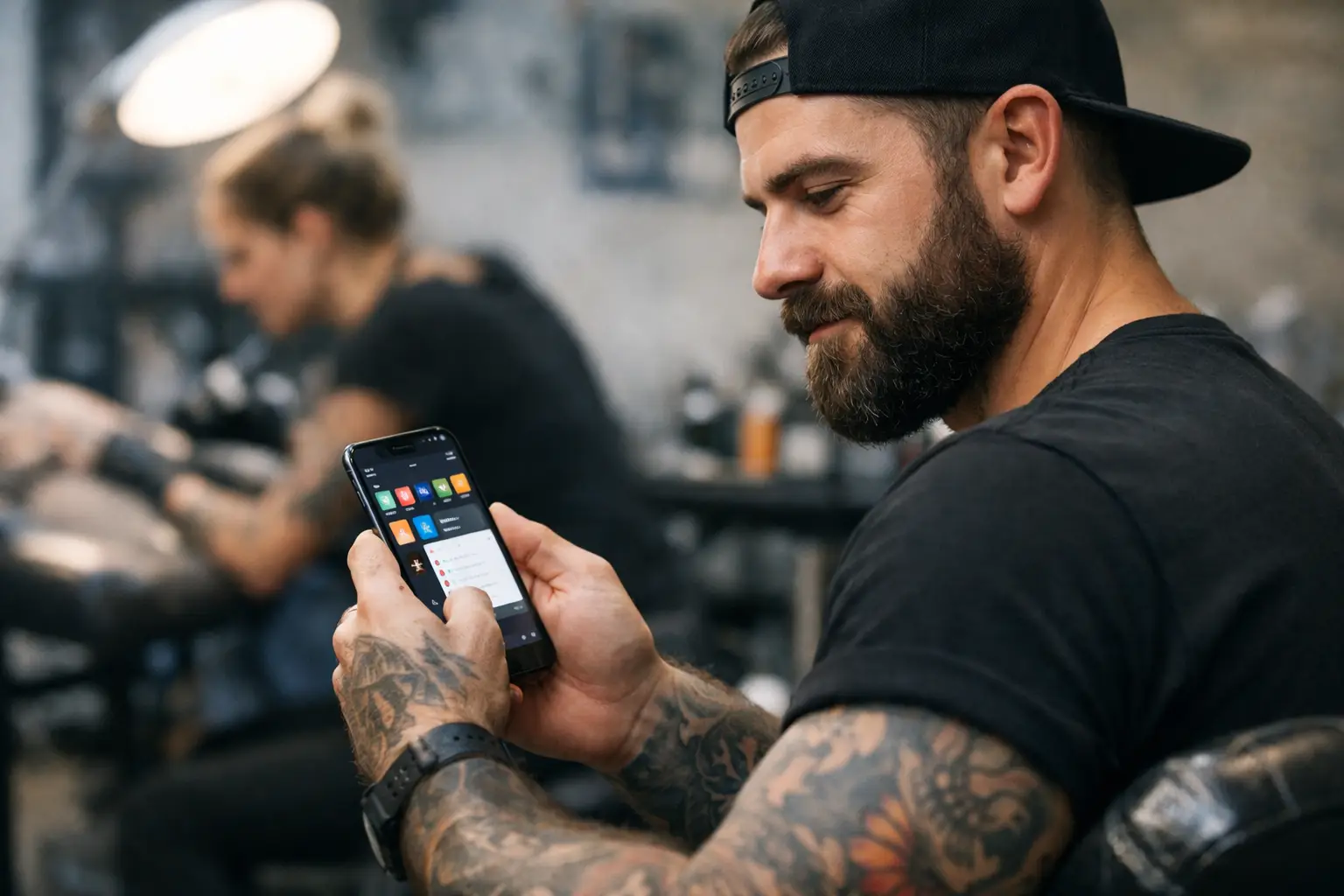
You know the moment. A client DMs at 11:47 p.m., sends three blurry reference photos, asks for a half sleeve quote, forgets their availability, then disappears when you mention the deposit. Two days later they come back with, “Hey, just checking in.” That right there is why an all in one tattoo studio app matters.
This isn’t about fancy tech. It’s about not wasting your night digging through Instagram, your notes app, a payment app, and a half-buried email thread just to book one appointment. If your booking process feels like chasing a greased pig through five different apps, the problem isn’t you. The setup is bad.
What an all in one tattoo studio app actually fixes
Most shop admin problems are not dramatic. They’re just constant. One missed message here. One unpaid deposit there. One consent form printed at the last second. One client showing up saying, “I never got the address.” None of that feels huge by itself. Stack it over a month and suddenly you’ve spent a full workweek doing stuff that isn’t tattooing.
An all in one tattoo studio app pulls the whole mess into one place. Inquiries come in with the info you actually need. Appointments get booked without the usual back-and-forth. Deposits are built into the process instead of being an awkward follow-up message. Consent forms stop living on clipboards and random PDFs. Payments are tied to the appointment instead of split across apps and mental notes.
That matters because every extra step gives clients a chance to disappear. Not always on purpose. People get busy, forget, lose the message, mean to reply later, then never do. The more scattered your process is, the more leaks you get.
The real cost of doing it the old way
A lot of artists stick with DMs because it feels easy. At first, it is. You already use Instagram. Clients already message you there. No setup. No learning curve. Just chaos wearing a familiar jacket.
The problem shows up when volume picks up. Five inquiries is manageable. Twenty starts getting ugly. Forty means you’re answering the same questions over and over, trying to remember who paid, who rescheduled, who filled out paperwork, and who is still “super serious” but hasn’t sent a deposit in ten days.
That admin tax doesn’t just eat time. It breaks your focus. Tattooing takes attention. Designing takes attention. Talking clients through ideas takes attention. When your brain is full of loose ends - check that Venmo, find that form, answer that DM, update that calendar - your day gets chopped into pieces.
And then there’s no-shows. Not every no-show is preventable, but plenty happen because the booking process was loose from the start. No deposit, no reminder, no signed consent ahead of time, no clear confirmation. That’s not a client problem alone. That’s a system problem.
What to look for in an all-in-one tattoo studio app
Not every app that says “all-in-one” really is. Sometimes that just means a calendar plus a form and then you still need two other tools to actually get paid and collect paperwork. That’s not all-in-one. That’s a bundle of chores.
A useful setup should handle the full path from first inquiry to finished appointment.
Inquiries that don’t waste your time
You should be getting the basics upfront - placement, size, style, reference images, budget, and availability. If clients can contact you without giving any real info, you’re just signing up for more follow-up messages.
Good inquiry flow cuts out the “Hey, how much?” loop before it starts. You get what you need. The client knows what to expect. Less back-and-forth. Better leads.
Booking that feels easy for the client
If booking takes too many steps, people bail. That doesn’t mean you need to be casual about it. It means the process should be clear.
Clients should know where to go, what to pick, how much the deposit is, and what happens next. No scavenger hunt through your bio, stories, and pinned posts. One path. Simple.
Built-in deposits and payments
This is the big one. Stop chasing deposits.
Any system that makes you manually message payment instructions after someone says they want to book is already wasting your time. Built-in payments matter because they close the loop right there. If someone wants the appointment, they pay the deposit as part of the booking process. Done.
Same goes for final payments. Keeping that connected to the appointment makes your records cleaner and your day smoother. No bouncing between apps trying to confirm who paid what.
Automatic consents
Paper forms work until they don’t. Somebody forgets. Somebody rushes through it in the lobby. Somebody writes like a raccoon.
Automatic consents are better because they get handled before the appointment. You have records where they belong. Clients aren’t standing at the counter filling out paperwork while you’re trying to set up.
Reminders that reduce no-shows
People forget stuff. They forget dentist appointments, birthdays, and the lunch they just put in the office fridge. Of course they forget tattoo appointments sometimes too.
Automatic reminders help because they keep the appointment real in the client’s mind. Not every missed session disappears, but enough do to make it worth it.
Why this matters more when your books are full
If you only tattoo once in a while, you can brute-force admin. If you’re busy, brute force stops working.
A packed schedule needs less friction, not more. Every manual step becomes a problem at scale. Every “I’ll just track it myself” system eventually turns into a mess of screenshots, notes, and crossed fingers.
That’s where an all in one tattoo studio app earns its keep. Not because it does something magical. Because it removes repeat problems before they hit your chair.
You don’t need more hustle. You need fewer stupid tasks.
The trade-off: setup now or headaches forever
To be fair, switching systems is annoying for about five minutes. You have to set things up. Maybe tweak your booking flow. Maybe decide how you want deposits handled. Maybe stop doing that one weird workaround you invented in 2021 and have been defending ever since.
But that short setup beats repeating the same admin nonsense every week.
It also helps to be honest about how your shop works. A solo artist might want a very simple intake flow. A busier private studio or multi-artist setup may need more structure. The right app should make that easier, not bury you in settings you’ll never use.
So yes, it depends. If your current system is somehow clean, fast, and never drops the ball, great. Keep it. But if your day includes chasing deposits, answering duplicate messages, printing forms, or trying to remember whether someone is confirmed, then the current setup is costing more than it looks.
Built for tattoo artists, not office people
This is where a lot of tools miss the mark. They’re built like generic scheduling software and then dressed up for tattooing later. You can feel it immediately. Weird fields. Clunky forms. Too much fluff. Not enough tattoo-specific logic.
Tattoo artists need something that understands how bookings actually work. Custom pieces. Back-and-forth before approval. Deposits that matter. Consent forms that can’t get lost. Clients who swear they sent the payment. Days that go from calm to chaos fast.
That’s why something like OneBook makes sense. It was built for tattoo artists who were tired of running their whole process through DMs, spreadsheets, payment apps, and printer paper. One app. Inquiries, appointments, deposits, payments, and consents. Dirt cheap too, which matters when you’re paying for tools out of your own pocket.
The best all-in-one tattoo studio app should give you your time back
That’s really the point.
Not more dashboards. Not more “features.” More time tattooing. More finished work. Fewer admin loose ends following you home.
A good system should make your shop feel tighter without making it feel corporate. Clients get a cleaner experience. You get fewer headaches. Your books stay full without your phone becoming a second full-time job.
And if you’re on the fence, start simple. Look at where your booking process breaks most often. Is it the inquiry stage? Deposits? Consent forms? Payment tracking? That pain point usually tells you what needs fixing first.
The right app won’t make bad clients perfect or turn every inquiry into a booking. But it will cut the friction, reduce the nonsense, and help the solid clients actually make it onto your calendar.
That’s a pretty good trade - less chasing, less paperwork, more tattoos.
