What Should Tattoo Intake Ask Clients?
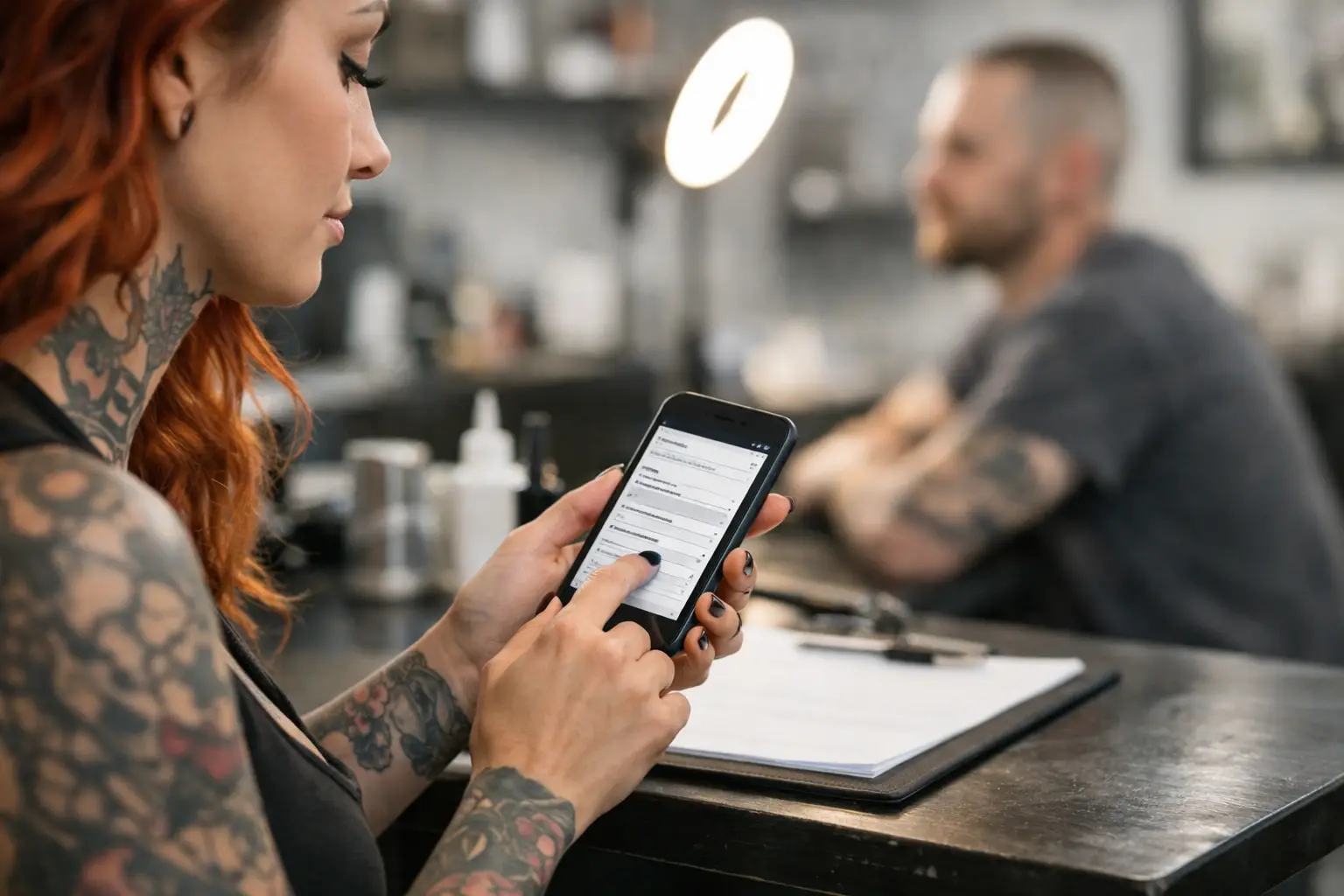
A bad intake form usually shows up later as a bad day. The client ghosted after three rounds of messages. They booked a half-day for a rib piece and forgot to mention they only wanted to spend $150. Or they show up ready for a hand tattoo when you never even offer them. If you’re wondering what should tattoo intake ask, the short answer is this: ask anything that helps you decide fit, quote accurately, and avoid the dumb back-and-forth.
The trick is not asking everything under the sun. Clients hate homework. Artists hate sorting through useless answers. Good intake gets you the right info fast, before the booking turns into a part-time job.
What should tattoo intake ask first?
Start with the stuff that decides whether the project is even worth moving forward. Name, email, phone number, and preferred pronouns are not the point here. Contact info matters, sure, but it won’t tell you whether this is a solid booking or a headache in a hoodie.
The first real question should be about the tattoo itself. What are they trying to get? Not just "tattoo idea," either. You want a short description in their own words. That tells you a lot. Some clients are clear. Some are vague. Some write a novel. All three tell you something before you’ve typed a reply.
After that, ask placement and approximate size. Those two questions change everything - design time, pricing, session length, pain expectations, and whether the idea even works. A 3-inch rose on the forearm is one job. A full side panel with roses, script, and a portrait is a totally different beast.
Then ask reference material. Do they have images? Existing tattoos nearby? A cover-up? Scar tissue? This is where intake stops being basic and starts saving your time.
The questions that actually save you time
A tattoo intake form should do more than collect leads. It should screen. That means every question needs a job.
Ask about style preference. If they want fine line micro realism and you do bold traditional, better to find that out now than after twenty messages and a deposit refund conversation nobody wants. Intake should help clients self-sort before they clog your inbox.
Ask about budget range, but do it cleanly. Some artists avoid this because it feels awkward. It’s not awkward. What’s awkward is building out a custom concept for someone who thought a full sleeve would cost the same as dinner and a movie. A rough budget range gives you context. It also tells you whether to suggest a smaller version, more sessions, or a polite pass.
Ask about timing, too. Not because every request needs an exact date right away, but because urgency changes the conversation. If they’re booking for a wedding next month, traveling in from out of town, or trying to get tattooed next Tuesday, that matters. Not every artist can or should bend around rush requests.
And yes, ask whether they’ve been tattooed before. Not because beginners are a problem, but because first-timers often need more prep, more explanation, and better expectations around pain, healing, and session flow.
What should tattoo intake ask about health?
This is where a lot of artists either ask too little or ask it at the wrong time.
For initial intake, you do not need a full medical interrogation. You need enough information to flag issues that affect booking. Pregnancy, blood thinners, major skin conditions in the area, recent surgery, severe allergies, or anything that could affect the appointment should be disclosed before the date is locked in.
Keep it simple. Ask whether they have any medical conditions, medications, allergies, or skin issues that may affect the tattoo or healing process. If yes, give them space to explain. That keeps the form lean for most people and still catches what you need.
The full legal consent can come later. That’s where you get detailed health disclosures, signatures, age confirmation, and policy acknowledgment. If you cram all of that into the first inquiry form, completion rates drop. People bounce. Then you’re back in DMs asking for the same info anyway.
So the move is simple: intake for fit and booking, consent for legal coverage and appointment readiness.
Ask the stuff that prevents bad bookings
Some of the best intake questions are the ones that stop a bad appointment before it starts.
If you don’t tattoo certain body parts, ask about placement early. If you don’t do cover-ups, ask whether this is going over an existing tattoo. If you charge differently for flash, customs, and touch-ups, ask which one this is.
Touch-ups especially deserve their own question. A client asking for a touch-up is not the same as a new booking, and you do not want that buried in a paragraph about "just fixing a few lines." Same goes for cover-ups and reworks. Those projects need clear photos and different planning.
Photo uploads matter here. If the request involves a cover-up, blast-over, scar, tricky placement, or surrounding tattoos, you need to see it. Otherwise you’re guessing, and guessing is how quotes get messy.
This is also where policies can quietly do their job. If your intake includes a simple acknowledgment that deposits are required, appointments are not held without payment, and late arrivals may need rescheduling, you cut down on surprises later. Nobody reads a giant wall of policy text. Keep it short.
How many questions is too many?
Enough to get what you need. Not enough to make clients feel like they’re applying for a mortgage.
A strong tattoo intake usually lands somewhere between eight and twelve questions, depending on your style of work. If you do mostly repeatable flash, you need less. If you do custom large-scale work, you need more. The mistake is adding questions just because they might be nice to know.
Nice to know is not the same as need to know.
For example, asking how they found you can be useful. Asking for their Instagram handle can help if that’s where you message. Asking their favorite color when the project has nothing to do with color is just busywork. Every extra field is one more chance for them to bail halfway through.
If a question doesn’t help you price, screen, prepare, or protect yourself, cut it.
A solid intake flow looks like this
The best forms follow the same order your brain already uses when deciding whether to book someone.
First, who are they and how do you contact them? Then, what do they want? Where does it go, how big is it, and what style are they after? After that, what complications are involved - cover-up, existing tattoo, scarring, medical concerns, timing issues, budget mismatch? Last, what do you need from them next - photos, deposit, consent, appointment selection.
That order matters. It keeps the form feeling natural instead of random. It also makes it easier for you to scan answers fast and make a call.
This is why messy intake creates messy books. When inquiries come in through scattered DMs, email chains, text messages, and random story replies, basic details get lost. You end up asking the same questions three times, and the client starts acting like you’re the disorganized one. That gets old fast.
What should tattoo intake ask if you want fewer no-shows?
Ask for commitment signals, not just tattoo details.
That means asking for preferred appointment days, confirming they understand a deposit is required, and collecting the contact info you’ll actually use for reminders. People are way more likely to disappear when the booking process feels loose. If they can "maybe" hold a spot without paying, they will. If the process is clear, they either book or they don’t.
This is also where automation earns its keep. If your form flows straight into appointment selection, deposit collection, and automatic consents, you remove the dead space where clients disappear. OneBook does this well because it keeps inquiries, bookings, consents, deposits, and payments in one place. Less chasing. More tattoos.
Still, no form can fully replace judgment. You’ll always get a few inquiries that feel off. Vague answers, weird urgency, no respect for pricing, refusal to send photos - that stuff tells a story. Intake should help you spot it early, not force you to pretend every lead is a good one.
The best tattoo intake questions are boring on purpose
That’s the funny part. The questions that save your day are not glamorous. They’re practical. What do you want? Where does it go? How big? What style? What’s your budget? Is this a cover-up? Any health issues we need to know about? Can you send photos?
Simple questions. Better bookings.
You do not need an intake form that feels fancy. You need one that stops wasted time, gives you enough detail to price correctly, and moves good clients toward a real appointment. If your current setup still has you digging through messages for reference pics and asking, "Wait, was this the thigh tattoo or the forearm one?" then your intake is not doing its job.
Make it short. Make it useful. Make every question earn its spot.
Then let the form handle the talking so you can get back to tattooing.
