Multi Session Tattoo Scheduling That Works
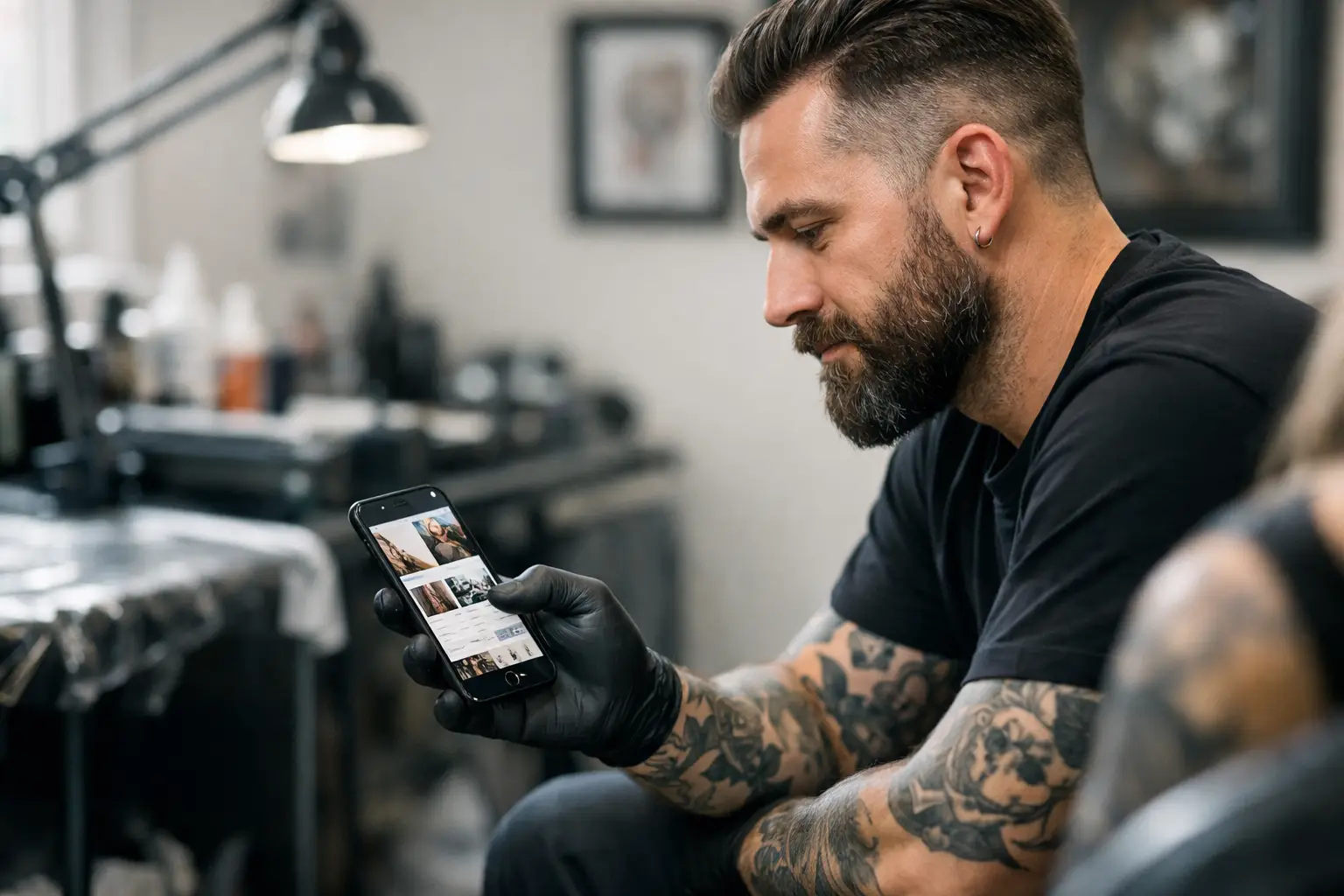
Big tattoo projects are fun until the calendar starts swinging back at you. One sleeve turns into six appointments, one reschedule wrecks three weeks, and suddenly you’re digging through DMs trying to remember whether session four was lining or background. That’s why multi session tattoo scheduling matters. If you don’t set it up right from the start, big work turns into admin work.
The problem usually isn’t the tattoo. It’s the chain reaction. Large pieces need healing time, design approvals, deposit tracking, prep notes, and clear expectations on what happens if a client disappears after session two. If your system is loose, your schedule gets loose with it.
Why multi session tattoo scheduling falls apart
Most artists don’t mess this up because they’re careless. They mess it up because they’re busy. A client sends references on Instagram, confirms in text, pays a deposit through one app, signs paperwork somewhere else, and asks to move session three while you’re tattooing somebody’s ribs.
That’s how details get lost.
Multi-session work has more moving parts than a single afternoon tattoo. You’re not just booking a date. You’re mapping a project. That means placement, session goals, healing gaps, client budget, travel plans, pain tolerance, and your own bandwidth all matter. If one part gets handled casually, the whole thing starts wobbling.
There’s also the money side. Some artists take one deposit for the full project. Some take a deposit for each session. Some roll forward a deposit if the client gives enough notice. None of those options are wrong. But if your policy lives only in your head, clients will hear whatever version helps them most.
How to set up multi session tattoo scheduling properly
The easiest way to keep large projects under control is to treat them like a plan, not a pile of appointments.
Start with the consult. That’s where you decide whether this is a two-session piece, a five-session piece, or a project that needs flexibility because the skin, design, or placement will tell the story as it goes. Don’t promise a perfect number if you know it depends. Give a realistic range and explain why.
Then book with intention. For most bigger pieces, booking the first two or three sessions upfront makes more sense than trying to lock in every single appointment for the next six months. Too far out, and life happens. Not far enough out, and the project loses momentum. The sweet spot is usually enough sessions to keep the work moving without turning your calendar into a hostage situation.
You also need session labels that mean something. “Tattoo appointment” is useless when you’re staring at a packed week. “Full sleeve session 2 - outer arm shading” tells you what’s happening. It also helps the client feel like the project is real and progressing.
Healing windows matter too. Some clients want to power through fast. Some skin says absolutely not. Multi session tattoo scheduling works best when you leave enough space for healing without letting months drift by for no reason. There’s no magic rule for every piece, but there is one solid principle - don’t book based on optimism alone.
What to lock in before session one
A lot of scheduling problems start because artists are trying to be chill. Being chill is great until someone ghosts session two and acts confused about the deposit.
Before the first appointment, the client should know four things clearly. How many sessions the project might take. How deposits work. How rescheduling works. And how long they can reasonably wait between sessions before momentum gets weird.
You don’t need to write a novel. You just need clean rules.
If you require a deposit for every session, say it plainly. If one deposit secures the first date and future sessions are booked at checkout, say that. If you only hold follow-up appointments for clients who keep up with the plan, say that too. Clear beats nice when calendars are involved.
Consent forms should be handled before the needle hits skin, not while the client is halfway through a granola bar in your waiting area. Same for payment setup. Big projects go smoother when the boring stuff is already done.
The real trade-offs with booking all sessions at once
Some artists like to book the whole project in one shot. There’s a good reason for that. It protects momentum, gives the client a roadmap, and cuts down on the endless “hey, what days do you have next month?” messages.
But there’s a downside. Long-range booking can clog your calendar with tentative plans. If the client flakes, gets busy, moves, changes jobs, or decides they suddenly need to “wait until after summer,” you’re left with dead space that could have gone to solid clients.
Booking one session at a time has the opposite problem. It gives you flexibility, but it creates more back-and-forth and makes it easier for a large piece to drag on forever.
That’s why a middle-ground system usually wins. Book the first session, then book the next one or two before the client leaves. Keep the project moving, but don’t marry your calendar to someone’s best intentions.
How to reduce reschedule chaos
Reschedules are part of tattooing. Emergencies happen. Skin needs more time. Work trips pop up. Flu season loves a packed appointment book.
The goal isn’t to stop every reschedule. The goal is to stop one reschedule from wrecking five other things.
That starts with policy, but it also depends on how easy your process is. If a client has to message you on three platforms just to move a date, they’ll either put it off or do it badly. If you keep project notes, deposits, forms, and payment status all in one place, fixing one appointment doesn’t turn into detective work.
Automatic reminders help more than artists like to admit. A lot of no-shows are not dramatic. They’re just disorganized people being disorganized. Reminder messages, signed consents, and built-in payments don’t make clients perfect, but they do reduce the dumb stuff.
That’s where an all-in-one setup earns its keep. OneBook was built for tattoo artists who were tired of chasing deposits, checking five apps, and piecing together bookings from old messages. For multi-session work, having everything in one place is the difference between running a calendar and babysitting one.
Build your schedule around energy, not just availability
Here’s the part artists know but don’t always act on - not every open slot should be filled with long-session work.
Big projects take more out of you. A full-day back piece is not the same as a palm-sized fine line tattoo at noon. If you stack too many heavy sessions in a row just because the calendar says you can, your work and your body will call you out later.
Multi session tattoo scheduling should protect your energy too. Spread demanding work across the week. Leave room for drawing. Leave room for life. Leave room for the client who needs a touch-up or the regular who wants something small and easy. A packed schedule is not automatically a smart one.
This also helps with client expectations. When you book realistically, you’re less likely to run behind, cut sessions short, or start projects you can’t finish on time. That makes you look organized because you are organized.
A simple system beats a heroic memory
You do not need a giant management philosophy. You need a system you’ll actually use.
That means every large project should have a clear record. What was booked, what was completed, what’s next, what was paid, what forms are signed, and what happens if the client reschedules. If that lives across your camera roll, notes app, inbox, and DMs, it’s only a matter of time before something slips.
The best scheduling system is usually the one that removes little decisions. Fewer places to check. Fewer reminders to send by hand. Fewer moments where you stop mid-stencil and think, “Wait, did they ever pay the second deposit?”
Because that’s the real point of better booking. Not to feel more professional on paper. To spend less time doing admin and more time tattooing.
If your large-scale work keeps getting slowed down by messy calendars, unclear deposits, or scattered client info, fix the setup before you blame the project. Big tattoos already take enough patience. Your booking system shouldn’t need extra sessions too.
