Can Tattoo Artists Accept Payments Online?
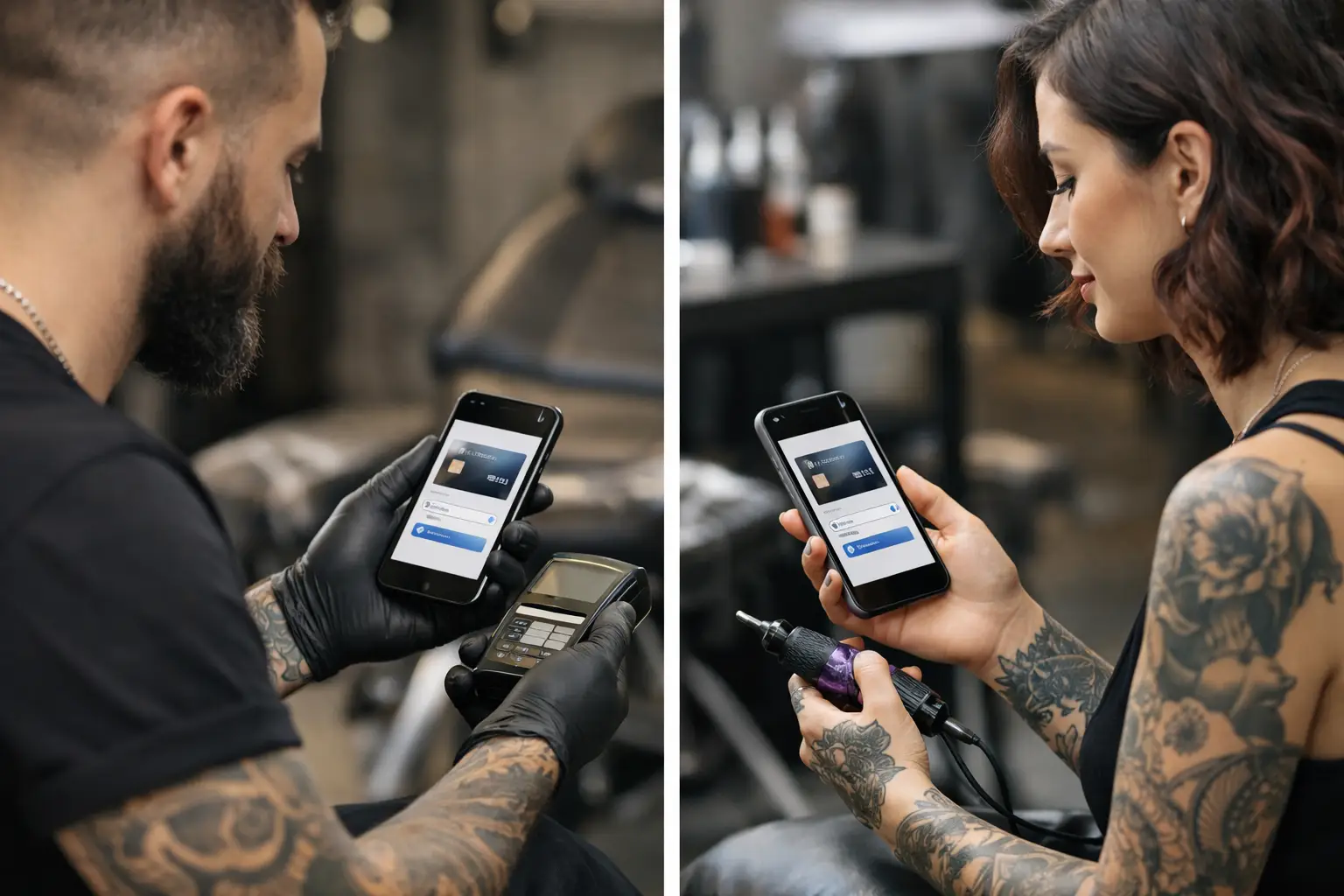
A client is ready to book, they love the design, and then the usual mess starts. You send your payment handle, they ask if Venmo is okay, you check three apps, lose the message thread, and somehow a simple deposit turns into office work. So, can tattoo artists accept payments online? Yes - and if you're still piecing it together with DMs and payment apps, you're making booking harder than it needs to be.
Online payments are not some big-tech luxury for giant studios. They're basic shop sanity. If you book clients in advance, take deposits, charge for drawing time, sell touch-up slots, or invoice custom work, you can absolutely take payments online.
Can tattoo artists accept payments online for bookings?
Yes. In most cases, tattoo artists can accept payments online for deposits, appointment fees, and final invoices, as long as the payment setup follows the rules in their state, province, or processor agreement. The short version is simple - online payments are normal, legal, and expected by a lot of clients now.
The bigger question isn't whether you can. It's how you want to do it.
A lot of artists start with whatever is easiest that day. One client pays one way, another client pays somewhere else, and suddenly you've got deposits sitting in different apps, screenshots for proof, and no clean record of who paid what. That works fine until your week gets busy. Then it gets stupid fast.
Why online payments make sense in tattooing
Tattooing is already full of moving parts. Consults, reference photos, redraws, reschedules, waivers, deposits, reminders. If payment lives outside your booking process, you're adding one more thing to chase.
Online payments cut down the back-and-forth. Instead of telling a client to message you when they've sent the deposit, the payment request can be part of the booking flow. They pick the slot, pay the deposit, sign what they need to sign, and you're done. Less admin. Fewer ghost bookings.
It also helps with no-shows. People treat appointments differently when money is attached and clearly documented. A casual "I'll send it later" turns into a real booking when the deposit is collected right there.
And from the client side, it feels normal. People order dinner, pay rent, and book haircuts from their phone. They don't want a scavenger hunt just to leave a tattoo deposit.
What tattoo artists usually accept payments online for
Most artists use online payments for deposits first. That's the cleanest use case. A client wants a slot, they pay to hold it, and the booking is confirmed.
Some also use online payments for consultation fees, especially if they're offering longer planning calls for large pieces. Others invoice for drawing fees, multi-session projects, or balances due before a travel date.
Where it gets a little more situational is final payment for the tattoo itself. Some artists are happy to take the full amount online. Others still prefer card in person, or they only use online billing for large projects and remote prep work. It depends on your setup, your tax reporting, your processor, and how you run your station.
The real issue: separate payment apps create extra admin
The problem isn't online payments. The problem is scattered online payments.
If you're taking inquiries in one place, booking in another, and collecting deposits through a separate app, you're basically building your own paperwork maze. Then you get to play detective.
Did they actually pay? Was that for the consultation or the tattoo? Was it refundable? Did they sign the consent form yet? Did that rescheduled appointment carry the same deposit?
That kind of mess doesn't make you look more professional. It just steals time from tattooing.
An all-in-one setup makes more sense because payment isn't a separate event. It's tied to the booking, the client record, and the appointment itself. One app. One trail. No screenshot archaeology.
How to accept online payments without making your life worse
You do not need some huge system with a hundred settings and a support ticket every time you blink. You need a setup that does three things well.
First, it should let clients pay easily. If the payment step feels clunky, clients stall. The fewer taps, the better.
Second, it should connect payment to the actual appointment. That means the deposit should show up with the client's booking info, not buried in a random app with a cartoon profile photo and no note.
Third, it should reduce admin instead of moving admin around. A lot of tools claim to help, but all they really do is give you more tabs.
If you're choosing a system, look at what happens after the client pays. Does the appointment confirm automatically? Does the artist get a clear record? Are consents attached? Can you tell at a glance who is booked and who is just "interested"? That's where the difference is.
Can tattoo artists accept payments online and still control deposits?
Definitely. Accepting payments online does not mean giving up control over your deposit policy. If anything, it makes your rules easier to enforce.
You can still decide whether deposits are non-refundable, transferable with notice, or applied toward the final session total. You can still require payment within a certain time to claim the appointment. You can still set different amounts based on project size.
The key is clarity. If your deposit policy only lives in your head or in old Instagram story highlights from six months ago, clients will test every edge of it. If the policy is shown during booking and attached to the payment step, there's less room for "I didn't know."
That helps you, and honestly, it helps decent clients too. Most people aren't trying to be difficult. They just want the process to be obvious.
What to watch out for
Online payments are worth it, but there are a few trade-offs.
Processing fees are the obvious one. If you accept online card payments, you'll usually pay a percentage. That's normal. For most artists, the time saved and the reduction in no-shows are worth more than the fee, but you still need to account for it.
Chargebacks are another reality. Clear deposit terms, signed consent documents, and appointment records matter here. If your system keeps everything connected, you're in a better spot than if you're digging through old messages trying to prove a client booked a date.
There's also the question of client preference. Some clients still want to pay cash in person for the final session. That's fine. Online payment doesn't have to replace every method. It just needs to fix the parts that waste your time.
The best use case for built-in payments
Built-in payments shine when you're tired of chasing deposits.
That's the pain point most artists know too well. A client says they're serious. You offer times. They disappear. Then they come back two weeks later asking if Saturday is still open. Or worse, they say they sent the deposit and you can't match the payment to anything because the username is something like TinyChaos87.
When payments are built into the booking process, the tire-kickers sort themselves out. Serious clients book. Non-serious clients fade out before eating your afternoon.
That alone can clean up your week.
For artists who want everything in one place, OneBook was built for exactly that. Inquiries, appointments, automatic consents, deposits, and built-in payments - without the usual mess. Dirt cheap, easy to use, and made for tattoo artists, not spreadsheet lovers.
So, should you accept payments online?
If you book ahead, take deposits, and want fewer no-shows, yes. If you're tired of checking DMs, payment apps, notes, and calendar entries just to confirm one appointment, also yes.
The only version that doesn't really work is the half-system. That's where you keep the chaos but add new tools on top of it. More tabs. Same headache.
Online payments work best when they are part of a clean booking flow. Client inquires. Client books. Client pays. Client signs. You tattoo. That's how it should feel.
You didn't become a tattoo artist to chase payment screenshots and explain your deposit policy fifteen times a week. Set it up once, make it easy for clients, and get back to the part that actually matters - more time tattooing.
