How to Book More Tattoo Sessions Without DM Chaos
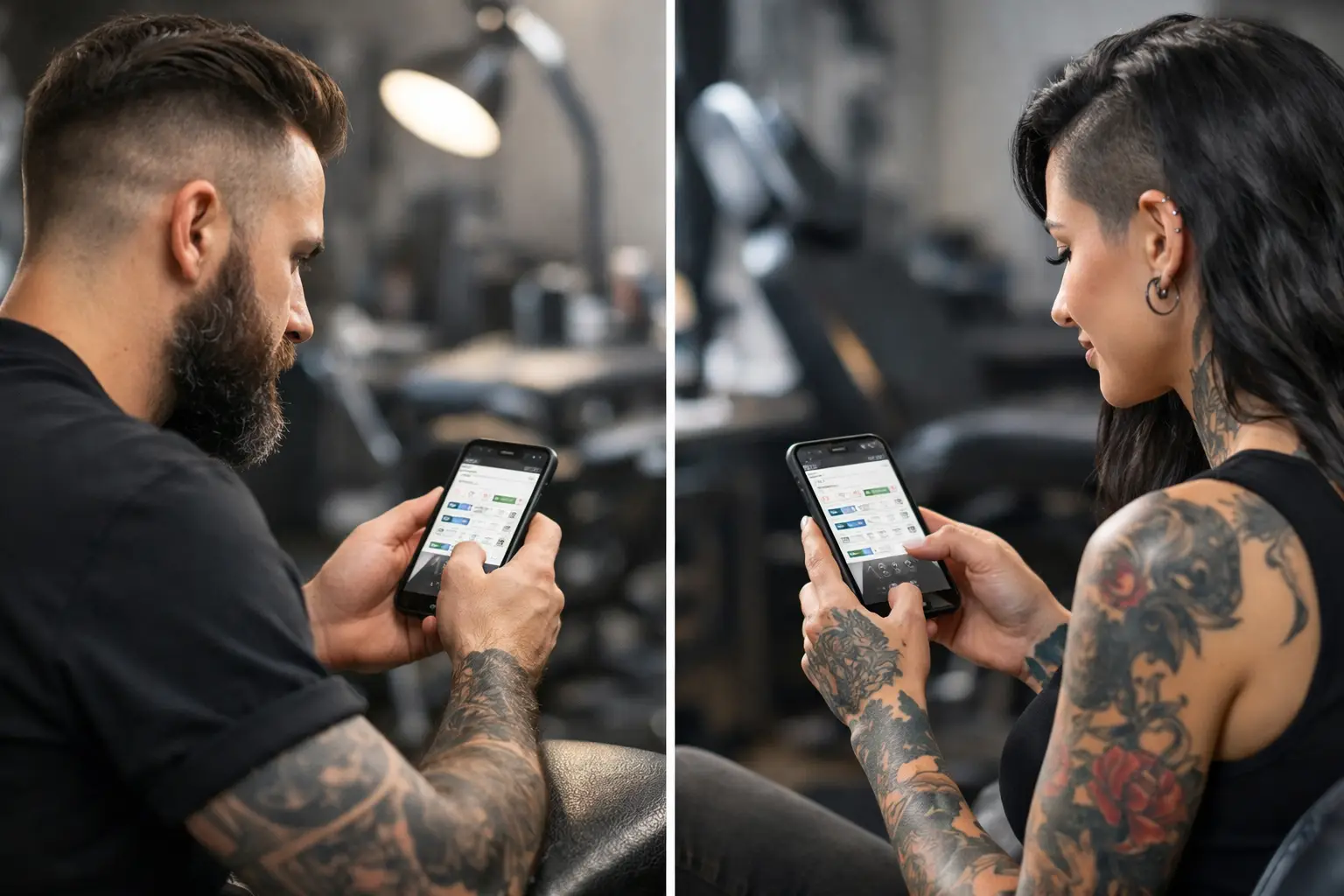
Your flash is solid. Your healed work gets reposted. People are asking, “How much for something like this?” Then their message disappears beneath 40 other DMs, a meme from your cousin, and a client asking if they can bring six friends to a three-hour appointment.
If you want to book more tattoo sessions, the answer is not always posting more. Sometimes the work is already there. The leak is between inquiry and appointment: slow replies, vague pricing, no deposit deadline, and a booking process that makes interested clients give up.
You do not need to become a salesperson. You need a booking setup that makes saying yes easy.
Book More Tattoo Sessions by Replying Faster
A fresh inquiry is hot for maybe a few hours. The client just found your work, pictured the tattoo, checked their bank account, and got brave enough to message. If they hear nothing for two days, they may book somebody else, change their mind, or send “just following up!” at 1:14 a.m.
You cannot answer every message while tattooing. Nor should you stop mid-linework to type out your availability. But clients do need a quick next step.
Set up a clear inquiry form that asks for the stuff you actually need: placement, approximate size, reference photos, budget range, preferred dates, and whether the design is custom or flash. This cuts out the exhausting 14-message interview where you are trying to figure out if “medium-sized” means two inches or a full back piece.
A good auto-reply can do some heavy lifting too. Keep it human. Let people know their request came through, when they can expect a response, and what happens next. That is not cold. It is better than leaving someone staring at “seen” for three days.
Fast does not mean rushed. It means every serious client knows where they stand.
Make Your Availability Easy to Understand
“Hey, what days do you have?” looks like a simple question. It is usually the beginning of a long, painful thread.
You offer Tuesday at 1. They work. They offer Saturday. You are booked. You offer Thursday at 11. They ask if you have anything after 6. By the end, neither of you remembers what month you were talking about.
Give clients real openings to choose from. Keep your calendar current. Block off drawing time, days off, conventions, and the slots you need for larger work. If your booking system shows time that does not actually exist, it creates more back-and-forth, not less.
There is a trade-off here. Opening every empty hour to online booking can work well for flash, touch-ups, and repeat clients. Custom work usually needs approval before it hits the calendar. The fix is not treating every tattoo the same. Build separate paths: a straightforward route for bookable work and a review step for projects that need your eyes first.
That protects your calendar from surprise neck pieces, impossible cover-ups, and “I want a full sleeve but only have 90 minutes” requests.
Stop Chasing Deposits
A booking without a deposit is not really a booking. It is a pinky promise with a calendar invite.
Deposits help clients commit, protect your time, and make rescheduling rules easier to enforce. The problem is the old routine: send payment handle, wait for payment, check if it arrived, match a random username to a client, then manually update the appointment. Repeat forever.
Make the deposit part of the booking flow. The client picks an approved time, pays the required amount, and gets confirmation. No screenshots. No “Did you send it?” No digging through payment apps while a stencil is drying.
Be clear about your policy before money changes hands. State the deposit amount, whether it goes toward the tattoo, how much notice is needed to reschedule, and what happens after a no-show. Plain language beats a giant wall of fine print.
You also need room for judgment. A longtime client with a real emergency is different from someone who has ghosted two appointments already. A policy gives you a backbone. It does not mean you have to tattoo like a robot.
Reduce No-Shows Before They Happen
Most no-shows do not start with bad intentions. People forget. They mix up the date. They get nervous. They never wrote down the studio address. Then there are the clients who fully intended to come, until a reminder would have made them realize they had booked during their cousin’s wedding.
Automatic reminders solve a lot of this. Send one when the appointment is confirmed, another a few days before, and a final reminder the day before. Include the time, location, preparation notes, and any instructions that matter for your studio.
Keep those notes useful. Tell clients to eat beforehand, bring ID if required, wear clothing that gives access to the placement, and arrive on time. Do not bury the important stuff under five paragraphs of all-caps warnings.
For longer appointments, a quick confirmation request can help. If somebody does not confirm, you have time to follow up or potentially offer the slot to a waitlist. That is a much better outcome than sitting in a ready-to-go station while your afternoon disappears.
Make Consent Forms Part of the Appointment
Consent paperwork should not be the bottleneck that hits five minutes before you start. You know the scene: client is filling out a form on a cracked clipboard, spelling their email address three times, while you are trying to set up and answer another DM.
Send consent forms before the appointment. Clients can complete them from their phone, and you can see what is finished before they walk in. It keeps your records organized and your first few minutes focused on the tattoo, not paperwork.
This also makes the client experience feel more put together. They do not need a fancy concierge service. They just need clear instructions and fewer annoying steps.
Follow Up Without Being Weird
Not every inquiry becomes a booking on the first reply. That does not mean the client was never serious. They may be waiting for payday, figuring out a work schedule, or trying to decide between two placements.
A simple follow-up can bring good clients back without sounding desperate. If you approved a request and have not heard back, send a short note after a few days: their design request is still open, and the available dates may change. That is enough.
Do not keep poking forever. One helpful nudge is professional. Five messages about a deposit is how you become the person they mute.
The same goes for waitlists. If you get a cancellation, message people who have already asked for that type of opening. A Tuesday afternoon gap may be useless as a social post, but perfect for a local client who has been waiting on a small flash piece.
Let Your Content Do the Sorting
Your posts should make it easier for the right clients to inquire. Show healed tattoos, fresh work, flash, available designs, and the styles you actually want more of. If you want to do more black-and-gray realism, your feed cannot only show tiny fine-line hearts from a walk-in weekend.
Be specific in captions when it matters. Say when books are open, what kind of work you are taking, and where clients should send requests. If you have flash available, show the size, placement limits if any, starting price or price range when you are comfortable sharing it, and how to claim it.
You do not have to post every day like a content machine. A few clear posts beat a pile of vague “DM to book” captions that leave clients guessing. The goal is fewer bad-fit inquiries and more people who already understand your work, process, and price range.
Keep Everything in One Place
The fastest way to lose a session is to run your booking life through six different places. DMs for inquiries. Notes app for dates. A payment app for deposits. Email for references. Paper forms in a drawer. Then somebody asks to reschedule and you start playing detective.
An all-in-one setup gives every client one path from inquiry to completed tattoo. OneBook keeps inquiries, appointments, deposits, payments, and automatic consents together, so you can stop chasing deposits and stop digging through DMs for reference photos. It is built for tattoo artists, not people who enjoy spreadsheets for fun.
The point is not to make your studio feel corporate. It is to make it feel calm. Clients get clear next steps. You get a real calendar. And when you finish a long day, there is less admin waiting in your pocket.
More sessions do not always come from working more hours. Often, they come from protecting the leads you already earned. Make booking simple, make deposits automatic, and save your energy for the part that belongs under the machine, not behind a screen.
